The question in my inbox is almost always phrased the same way, and it is almost always sent late at night: is Mexico City safe for solo female travellers, or am I about to do something stupid. I understand the fear behind it, because Mexico is the country people around you have the loudest opinions about, and almost none of those opinions are about the specific place you are actually going. So let me answer it the only honest way I know how. Mexico City is one of the most alive, walkable, genuinely wonderful cities I have traveled alone, and it is also a place where I do not street-hail a taxi, ever, and I will explain exactly why. Both of those things are true at once, and the whole point of this piece is to help you hold them at once too.
Before I say a single word, the promise I make in everything I write: I will not tell you it is safe. Safe is not a thing I get to promise a stranger about a city with nine million people in it. What I can do is show you what the current government advisories actually say, dated and checked this week, and then tell you the specific, boring, on-the-ground habits that let me move through this city calmly. If you want the general playbook that sits under all of this, read my solo female travel safety tips first, because this piece assumes you have the basics and drills into Mexico City in particular.
What the advisories actually say, as of July 2026
Here is the thing almost every panicked email gets wrong. The US advisory for Mexico is not one number. It is rated state by state, and Mexico City has its own read that is completely different from the border states people are picturing when they say “Mexico is dangerous.”
As of July 2026, the US State Department has Mexico at an overall Level 2, Exercise Increased Caution (date issued May 29, 2026, page last updated August 11, 2025). But the number that matters for you is the one for the capital. For Mexico City / CDMX specifically, the State Department says exercise increased caution due to crime, which is the Level 2 read, and it places no travel restrictions on US government employees in Mexico City at all. That last detail is the tell I always look for, because the same advisory does restrict its own staff from whole other states.
And those other states are the ones driving the scary headlines. The advisory currently rates six states Level 4, Do Not Travel: Colima, Guerrero, Michoacan, Sinaloa, Tamaulipas, and Zacatecas. Another cluster sits at Level 3, Reconsider Travel, including Guanajuato, Jalisco, Chihuahua, Baja California, Morelos, Sonora, Chiapas, and Coahuila. Notice what is not on either of those lists: Mexico City. The cartel violence that word “Mexico” conjures is real, and it is regional, and it is largely somewhere else. Reading the advisory by state instead of by vibe is the single most useful thing you can do before this trip.
You can read the full Mexico advisory yourself at travel.state.gov, and you should, because it updates and my dates will eventually go stale.
The UK’s read lines up. The Foreign, Commonwealth and Development Office (FCDO) advice on Mexico (updated July 3, 2026) does not advise against travel to Mexico City. It reserves its “advise against all but essential travel” warnings for specific trouble spots like the city of Acapulco and parts of certain states, not the capital. It does flag, for the whole country, that street crime and short-term “express” kidnapping happen in urban areas, that unlicensed taxi drivers have robbed passengers including in Mexico City, and that ongoing anti-gentrification protests have taken place in central and tourist areas since July 2025. You can read it at gov.uk/foreign-travel-advice/mexico. Enroll in your own government’s alert program before you fly, so the advisory comes to you if it changes while you are there.
| Source | Mexico City read | Date checked |
|---|
| US State Department | Level 2, exercise increased caution due to crime; no restrictions on US govt staff in CDMX | Issued May 29, 2026 (as of July 2026) |
| US State Department (context) | 6 states at Level 4 Do Not Travel; several at Level 3, none of them Mexico City | Issued May 29, 2026 (as of July 2026) |
| UK FCDO | No advisory against travel to Mexico City; general urban crime and express-kidnapping warnings | Updated July 3, 2026 (as of July 2026) |
Level 2 does not mean stay home. It means pay attention, and it means the risk here is ordinary urban crime you can plan around, not the thing you are afraid of.
Where you stay decides most of your trip
I say this about every city and it is triple true here: the neighborhood you sleep in shapes every walk home and every late arrival, and in Mexico City the gap between a good neighborhood and a bad one is wide. The good news is that the areas solo women actually love are clustered together and easy to base in.
The consensus base for a solo woman is Roma Norte or Condesa, and it has been for years. They are leafy, walkable, dense with cafes and bookshops and good food, and busy with locals and other travelers well into the evening, which is exactly the passive safety you want. Polanco is the upscale, quiet, buttoned-up option if you want calm over character. Coyoacan is charming and villagey, though its weekend crowds bring more pickpocketing. Juarez / Zona Rosa is central and convenient. Any of those five is a sound solo base.
The areas experienced solo travelers say to skip, especially after dark: Tepito, Doctores, and Iztapalapa, and parts of the Centro Historico late at night once the day crowds thin out. Centro is spectacular and completely worth visiting by day. I just do not linger there alone after dark, and I take a car back rather than walk. When I book, I read recent reviews specifically for how women describe getting back at night, and I try hard to arrive in daylight, because a strange megacity at 11pm with luggage is the one situation I most want to avoid.
The taxi rule that is not optional
If you remember one thing from this entire piece, make it this one. Do not hail a taxi off the street in Mexico City. Use Uber, DiDi, or Cabify. This is not me being precious. It is the single most repeated piece of advice from women who have actually done this trip, and it lines up exactly with the FCDO’s warning that unlicensed taxi drivers have robbed and assaulted passengers here.
The specific risk has a name locals use: secuestro expres, express kidnapping. A street-cab driver, sometimes with an accomplice, takes you not where you asked but to a string of ATMs, and makes you empty your accounts before letting you go, usually after an hour or so and usually unharmed. It is rare, it is concentrated in random street taxis rather than the tourist core, and it is almost entirely avoidable by never getting into an unbooked car. The apps fix this by design: the driver, the plate, and the route are logged to your account, and DiDi even records audio. DiDi is the local app and often a little cheaper, so I keep both DiDi and Uber installed and compare.
The airport is the one place people trip up. Uber and DiDi pick up outside the arrivals hall at a numbered door (Puerta), not at the curb where the drivers hustle you. Clear customs, then let the app tell you which door, and have a working eSIM or SIM already active because the airport wifi is unreliable and you do not want to be arranging a ride on a stranger’s hotspot. Always match the plate and the driver’s face to the app before you get in. If either is off, cancel and rebook. A cancelled ride is free. The alternative is not.
Getting around, the metro, and the altitude nobody warns you about
The Mexico City metro is cheap, vast, and efficient, and yes, solo women use it, mostly by day. Two honest things about it. First, it has women-only cars (“Solo Mujeres,” usually the front car, marked in pink), which are genuinely useful at rush hour even though the occasional man ignores the rule. Second, pickpocketing and phone-snatching are common in crowded cars and at transfer stations, with grabs through closing doors reported at busy stops. I hold my bag in front of me, keep my phone away in a crush, and at night I switch to a car rather than the metro. By day it is one of the great cheap pleasures of the city.
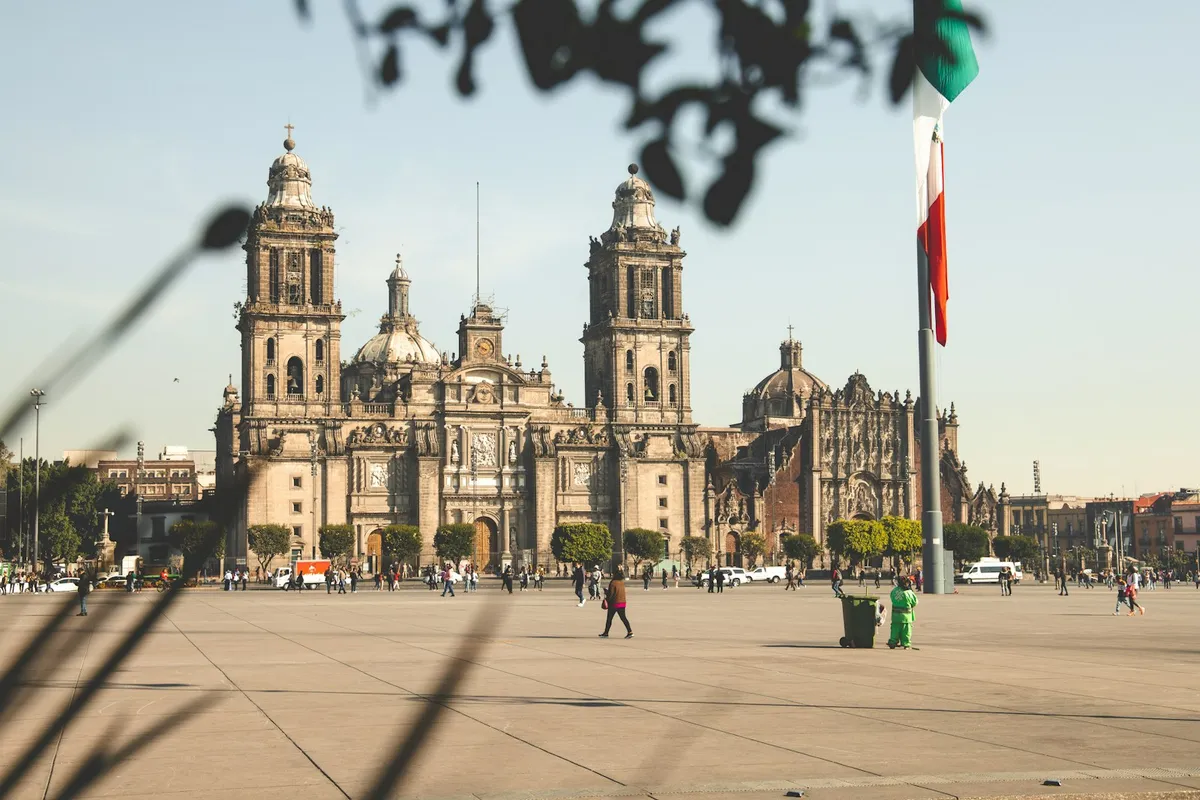
Now the thing that blindsides people, and it is not crime at all. Mexico City sits at about 2,240 metres, roughly 7,350 feet. That altitude will find you on day one or two whether or not you get full altitude sickness: fatigue, a dull headache, breathlessness on the stairs. Two rules save the day. Drink far more water than feels necessary, starting the moment you land. And go easy on alcohol for the first day, because it hits noticeably harder up here and deepens the dehydration. I keep my arrival day deliberately slow, a gentle walk and an early night, and I am a functional human by day two. Trying to power through with a margarita on night one is how people lose the first half of their trip.
Cash, ATMs, and the scams that actually happen
The unglamorous money logistics are safety, because the most likely thing to derail your trip is not the dramatic crime, it is a skimmed card or a distraction theft.
For cash, I use ATMs inside banks, malls, or supermarkets, never a standalone machine on the street, because card skimming is a documented problem even in the nice neighborhoods. I cover the keypad, check the card slot for anything that looks stuck on, and I carry only about 500 to 1,000 pesos for the day and leave the rest, plus my cards and passport, in the room. Tips here are best given in cash, because card tips often do not reach the staff. Around 10 to 15 percent is standard at a restaurant.
The scams to actually know, because they are specific and repeatable:
- The distraction spill. Someone “accidentally” gets ketchup, mustard, a drink, or something worse on you, a helpful stranger swoops in to clean you up, and a third set of hands lifts your bag or phone. It clusters around the Zocalo and Centro Historico. If someone suddenly makes a mess of you, step back, keep your bag clamped, and clean yourself off, no thank you.
- Fake or shakedown police. Someone in a uniform claims you committed a small infraction and wants an on-the-spot cash “fine.” You can ask for identification, offer to sort it at a station, and stay calm and unhurried. A real officer will not evaporate.
- ATM skimming and shoulder-surfing, per the cash rules above.
- The urgent phone scam, where a caller poses as a kidnapped relative demanding money. If a call arrives with panic and urgency, hang up and verify through your own contacts.
None of these require you to be a hero. They require you to be a half-second less trusting than the scam needs you to be, which mostly means not letting a stranger’s urgency become your urgency.
The honest vibe, harassment included
Here is what I want you to actually feel, past the advisory language. Solo women overwhelmingly report feeling safe and genuinely happy in the tourist neighborhoods by day, basing in Roma or Condesa, walking to breakfast, spending afternoons in museums and parks, and taking a car at night. That is the normal shape of this trip, and it is a good one.
The honest caveat is catcalling. Piropos, the verbal street comments, still happen, more once you are outside the core tourist zones. It is usually non-threatening and mostly just tiresome. The move is the same one solo travel teaches you everywhere: keep a neutral face, do not engage, walk with purpose like you know exactly where you are going, and trust the small no. If a street or a situation feels wrong, turn around, even if you cannot say why. That instinct is information, not hysteria, and overriding it to be polite has never once served me.
So, is Mexico City safe for solo female travellers?
Here is my whole answer, plainly. Mexico City is a Level 2 city that a prepared solo woman can absolutely do, and thousands do every month. The risk is not the border-state violence the word “Mexico” conjures, it is ordinary big-city crime that you plan around: you base in Roma, Condesa, or Polanco, you never street-hail a cab and always use Uber or DiDi, you go slow on the altitude, you keep your cash small and your ATMs indoors, and you stay a half-step skeptical of any stranger who brings you urgency. Do those things and this becomes one of the most rewarding solo cities in the Americas.
I will not dress it up as guaranteed, because safe is not a state you reach and keep. It is a set of small, repeatable decisions you make on a specific street at a specific hour, and it shifts as conditions do, which is why I date what I say and send you to the advisories rather than my gut for the hard facts, as of July 2026. Check the State Department page and the FCDO page again the week before you fly, because the numbers I quoted will move eventually.
If after all this you decide Mexico City is a stretch too far for your first solo trip, that is a completely respectable answer, and I would point you at gentler on-ramps in my best solo trips for women. But if you want it, you do not need permission. You need the read you just got, the taxi rule, and a slow first day at altitude with a very large bottle of water. Go eat the tacos. Take a car home.