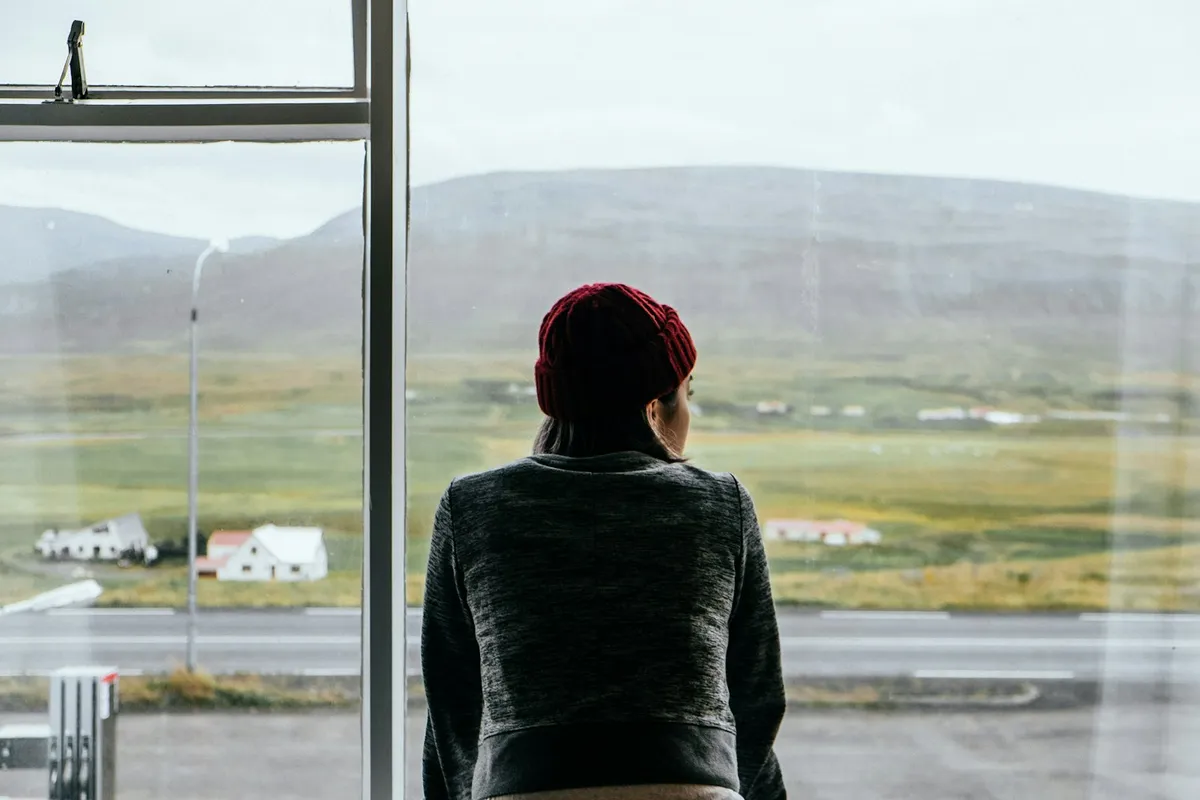
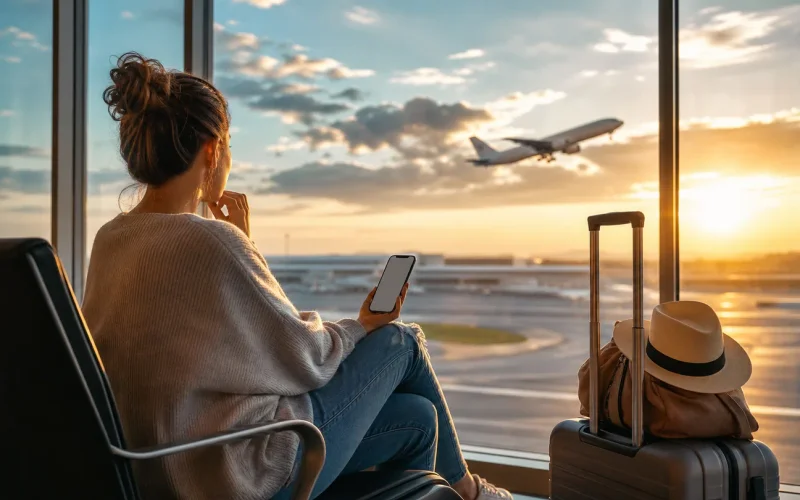
The night before my first solo flight I sat on the edge of my bed at 41 years old with a packed bag by the door and my passport in my hand, and I genuinely considered not going. Not because of anything real. The trip was booked, the room was paid for, the destination was safe. I considered not going because the fear had gotten loud enough to sound like wisdom, and it was whispering the most seductive lie it knows, which is that I would be more comfortable at home. It was right that I would be more comfortable. It was wrong that comfortable was what I wanted. I went. And the thing I learned in the days that followed is the thing this whole guide is built on. Traveling alone for the first time is far less about courage than about setup. If you build the trip well, the fear does not disappear, but it stops driving.
So this is the honest how-to I wish someone had handed me before that first flight. Not a list of dreamy destinations, and not a safety lecture, though I will point you to both. This is the practical and emotional walk-through of the thing itself: how to book your first solo trip, where to point it, what the first day actually feels like, and how to handle the fear that will absolutely show up, because it does, and it is not a sign you should stay home.
First, the fear, because it is sitting in the room with you
Let me name it plainly, because pretending you are braver than you are helps no one. The night before, and probably the morning of, you are going to feel something close to dread. Your body cannot tell the difference between “I am about to do something new and hard” and “I am in danger,” so it floods you with the same alarm either way. Knowing that helped me more than any pep talk. The pounding heart at the gate is not information about the trip. It is just your nervous system doing its old job badly.
What the fear is really protecting is not your safety. It is your certainty. At home you know how everything works: the coffee, the commute, the language, the version of yourself everyone expects. A solo trip strips all of that away at once, and the fear reads the loss of certainty as a threat. The trick is not to argue with it or wait for it to leave, because it will not leave before you go. The trick is to make the trip so well-scaffolded that you can be scared and safe at the same time, and then go anyway with the fear riding along in the passenger seat where it cannot reach the wheel.
I still feel a version of it before every trip. It is quieter now, more of a flutter than a wall, but it is there. What changed is not that I became fearless. It is that I stopped needing to feel ready before I would let myself leave.
Booking the first trip: keep it small on purpose
The most common first-solo mistake I see is the impulse to go big. To mark the occasion with something dramatic, far away, three weeks long, on the other side of the planet. I understand the pull, and I would gently steer you the other way. Your first solo trip is not the destination. It is the proof of concept. You are not trying to have the trip of a lifetime. You are trying to show yourself, in the lowest-stakes way possible, that you can land somewhere unfamiliar, feed yourself, find your bed, and enjoy your own company. Keep it small so that succeeding is easy.
Here is exactly how I would scope a first trip, and how I scoped mine:
- Short. Three to five nights. Long enough to settle in and stop white-knuckling, short enough that if it is hard, the end is always in sight. You can always go longer next time.
- Close. One flight, no complicated connections. A place you can reach before you have time to fully panic. My first was a direct hop, and I was grateful every minute for not having to make a tight transfer alone while frazzled.
- Easy language, or easy enough. Somewhere English gets you through the essentials, or where you already have a little of the language, so ordering dinner is not a daily act of bravery on top of everything else.
- Walkable, with real public transport. So you are not renting a car and navigating foreign roads while your nerves are already high, and so getting from the airport to your room is a solved problem before you land.
- One base, not a tour of five cities. Unpack once. Learn one neighborhood well enough that by day three it feels a little like yours. Moving hotels every night is a lot of logistics to manage solo on your very first go.
Then book the two things that anchor everything else before you book anything fun: a well-located room in a central, well-reviewed neighborhood, and a flight that lands in daylight if you can manage it. Arriving somewhere new for the first time, alone, in the dark, is the single situation I most want a first-timer to avoid, and paying a little more to land at 2pm instead of 11pm is worth every cent.

Where to go first: three gentle, boring-in-the-best-way starting points
People want a magic destination for the first trip, and there isn’t one, but there is a shape of place that makes the first time far kinder. It is safe, walkable, used to solo visitors, and not too far from home. A few that consistently fit that shape, with the caveat I will repeat until you are sick of it: check your own government’s current advisory before you book, because safety is a moving picture and no blog, including this one, replaces the official read for the week you travel.
- Portugal. My own first, and still the one I send nervous first-timers to most often. As of the U.S. State Department advisory last updated December 23, 2025, Portugal sits at Level 1, Exercise Normal Precautions, the lowest of the four tiers. That is not a promise nothing can happen; it is a sober read that violent crime against travelers is rare and the real thing to watch is petty theft in crowded tourist spots. Porto is compact, walkable, and completely used to solo diners.
- Ireland. English-speaking, which removes the language load entirely for many first-timers, and warm in the way that makes eating and asking directions alone feel easy. As of the State Department advisory last updated March 26, 2026, Ireland is also Level 1, Exercise Normal Precautions.
- Japan. Further, so slightly less “small,” but extraordinarily easy to move around alone thanks to its transport, and famously low on the kind of street hassle that wears solo women down elsewhere. As of the State Department advisory last updated August 11, 2025, Japan is Level 1, Exercise Normal Precautions. If you want your first trip to feel like a real adventure without feeling unsafe, it is a strong pick.
You can read every country’s current tier and the specific regional notes underneath it, which matter more than the headline number, at travel.state.gov. If you want a wider menu of first-timer-friendly places with the reasoning spelled out, I wrote a whole guide on the best solo trips for women. And if a divorce or a breakup is what has you looking at this at all, my honest guide to solo travel after divorce is the one to read next.
Before you leave: the boring setup that quiets most of the fear
Most of the fear you feel is not danger. It is the absence of a plan. So the antidote is not a pep talk, it is a checklist you can actually do at your kitchen table, and it is deeply unglamorous, which is exactly why it works. Here is my short version for a first trip. I keep a fuller, more careful list in my solo female travel safety tips, and I would read that one too before you go.
- Read the destination advisory, not just the level but the paragraphs underneath, and enroll your trip in the free Smart Traveler Enrollment Program at step.state.gov so your embassy has your dates and can reach you. If you hold a UK passport, the equivalent guidance is at gov.uk/foreign-travel-advice.
- Tell one person everything. Send one trusted person your full itinerary, every address and flight, and turn on live location sharing with them. On my first trip I texted my sister every single address. Knowing one person always knew where I should be took the edge off the aloneness in a way I did not expect.
- Buy real travel insurance, the kind that covers medical care and emergency evacuation, not just a cancelled flight, and read what it actually covers.
- Photograph your documents. Keep a photo of your passport in your phone and your email, stored apart from the original.
- Save the local emergency number and your embassy, because it is not always 911, and you cannot look it up calmly in an actual emergency.
- Pack light enough to carry yourself, up stairs, onto a train, for a few blocks, without help. No stranger to depend on is the whole point, and a bag you can manage alone is quietly one of the most freeing parts of the trip.
None of this removes risk. All of it means that if something wobbles, you are not starting from zero, and that quiets the specific fear that is not danger but simply not-having-a-plan.
What day one actually feels like
Nobody tells you the truth about day one, so here it is. It is often a little flat, a little lonely, and a little anticlimactic, and that is completely normal and not a sign you made a mistake.
You will land tired. The adrenaline that carried you through the airport drains out, and you will find yourself in a room in a strange city with no one to turn to and say “well, we made it.” That silence can land hard the first evening. When I arrived on my first trip I stood in my rented room, put my back against the door, and cried, not because anything had happened, but because nothing had, and I suddenly understood I was alone in a country where no one knew my name. Then I made myself go out and eat. That is the whole move. On day one you do not need to have a wonderful time. You just need to prove the machine runs.
So keep day one tiny. Do not plan a museum and a day trip and a big night out. Plan exactly one thing: get to your room, then walk out and get one simple meal nearby, ideally at a counter where you are beside other people rather than marooned at a table in the middle of a room. Bring a book or your phone as an anchor for your eyes if you need one. Nobody will be looking at you; the couple across the room is talking about their own day, and the waiter has served ten solo diners this week. Then walk one short, well-lit loop and go to bed. You will wake up on day two having already done the hardest part, which was simply existing alone in a new place for one evening, and the whole trip gets easier from there.
The first-timer mistakes worth skipping
You will make some mistakes and they will be fine; that is part of it. But a handful are common enough, and avoidable enough, that I will name them so you can skip straight past.
- Over-planning every hour. The instinct to armor yourself with a minute-by-minute itinerary is understandable, but a packed schedule you have to manage alone becomes its own source of stress. Book the room and the first transfer; leave the days loose. The freedom to sit in a square for two hours doing nothing is the point, not a failure to optimize.
- Under-budgeting time. Everything takes longer alone, because there is no one to split the map-reading and the ordering and the deciding with. Plan half of what you think you can do. You are not here to collect sights.
- Skipping the single supplement math. If you book a tour or a cruise as your first trip, know that many charge a solo traveler extra to occupy a room priced for two. Independent travel with a small guesthouse or apartment usually dodges it entirely, which is one more reason a simple, self-booked first trip is often the gentler one.
- Ignoring the small no. The single most useful thing I have learned is to trust the quiet internal flinch that says not this street, not this cab, even when I cannot explain it and even when I feel silly. Overriding that instinct to be polite has never once served me. Turning around costs you nothing.
- Waiting to feel ready. This is the big one, and it is not a logistics mistake, it is the fear wearing a reasonable face. You will not feel ready. Readiness is not a feeling that arrives before the trip; it is one you build by taking the trip. If you wait for it, you will wait forever.
The honest bottom line
Here is what I most want you to hear before your first solo trip. It is not a test you can fail. There is no grade at the end, no one keeping score, no version of this where you land, eat a few meals alone, find your way around a small safe city, and somehow come home a failure. The worst realistic outcome is that you have a slightly lonely, slightly awkward few days and learn that you can handle a slightly lonely, slightly awkward few days, which turns out to be an enormously useful thing to know about yourself.
What you actually get, if my first trip is any guide, is bigger than the trip. Somewhere in those few days of making every decision yourself, eating at your own table, following your own curiosity down streets no one had to agree to, a quiet piece of confidence sets in that you carry home and keep. You do not need anyone’s permission to go. You do not need to feel brave. You need a small trip, one person who knows where you are, a plan boring enough to quiet the fear, and the willingness to sit on the edge of the bed the night before, scared, and go anyway. That is all it ever was. Book the small version, and go.
Advisory levels and dates in this piece are current as of July 2026 and reflect the official U.S. State Department read at the time of writing, not a permanent guarantee. Always check your own government’s current travel advisory before you book.